


 役員の紹介
役員の紹介
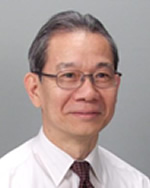 |
Chihiro Sasakawa, President Chihiro Sasakawa received his Ph. D. from the University of Tokyo in 1978. He was a postdoctoral fellow at Washington University, School of Medicine at St. Louis from 1980-1983. After return to Tokyo, he initiated studies on bacterial pathogenesis at the Institute of Medical Science, the University of Tokyo, and became a Professor in 1995. He served as the Head of Department of Microbiology and Immunology from 1999-2005. He became a Professor Emeritus of the University of Tokyo in 2012, and continuously dedicates not only to promote his own research but also participated in academia as a member of Science Council of Japan since 2010, the President of Federation of Microbiological Societies of Japan since 2010, the Director of Medical Mycology Research Center at the Chiba University since 2013, and Director of Nippon Institute of Biological Science since 2014. He was nominated as a member of American Academy of Microbiology in 2014. |
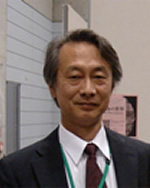 |
Ichiro Uyeda, Vice-President Ichiro Uyeda received his Ph. D. from Washinton State University, USA in 1978. After completing his Ph. D., he immediately joined Department of Botany, Faculty of Agriculture, Hokkaido University as a research assistant. He became a professor in 1999 at Graduate School of Agriculture, Hokkaido University. He has been studying plant viruses especially on the topics of diagnosis, classification, viral virulence and host resistance. He served as an editor in chief of Journal of General Plant pathology (2004-2007) and on the editorial board of Intervirology (1985-1990) and Molecular Plant Pathology on Line (1996-1999). He was appointed as a member of the International Committee for the Taxonomy of Viruses, IUMS - Plant virus Subcommittee Potyvirus Study Group (1990-2005), and - Reoviridae Study Group (1994-1999), and an executive secretary of International Working Group on Legume Viruses (2000-2002). He became a vice president of Hokkaido University in 2011. |
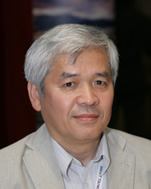 |
Kazuhiro Kogure, Vice-President Kazuhiro Kogure received his Ph. D. from the University of Tokyo in 1980. After spending two years as a post doc in Ocean Research Institute, the University of Tokyo, he moved to the University of Maryland, USA as a post doc. In June 1983, he became an assistant professor in Marine Microbiology Division, Ocean Research Institute, the University of Tokyo (ORI) and then in January 1993, as an associate professor. Since January 2002, he has been a professor in the division. In 2010 April, when ORI moved to Kashiwa campus, ORI and CCSR (Center for Climate System Research) were integrated into Atmosphere and Ocean Research Institute, the University of Tokyo. He changed his position to a newly established Center for Earth Surface System Dynamics, while still keeping the position in Marine Microbiology Division. He has been working on ecology and physiology of marine microorganisms. Some of his recent works are community and gene structural analyses of marine prokaryotes by using latest sequencing technology and also ecology and energetic contribution of proteorhodopsin possessing bacteria in the ocean. |
 |
Kiyoshi Kita, Councilor Graduated from the University of Tokyo Faculty of Pharmacy in 1974 and then completed the master’s course and the doctoral course of Tokyo University (doctor of pharmacy). Assistant at the University of Tokyo Faculty of Science until 1983, assistant and then lecturer at the Juntendo University School of Medicine until 1990, assistant professor at the University of Tokyo Institute of Medical Science after 1991, and the current position since March 1998. I am seeking improvement in human life and welfare through basic investigations. I am investigating pure, basic biology, such as biochemistry and molecular biology, in metabolic regulation and biomembranes, while conducting outside laboratory activities for global medical problems focusing on parasitic infection in Asia, Africa, and South America. A wide range of thorough investigations from basic to advanced studies in microbiology are essential to resolve the problem of infections, and I believe the Federation of Microbiological Societies of Japan will play an important role. |
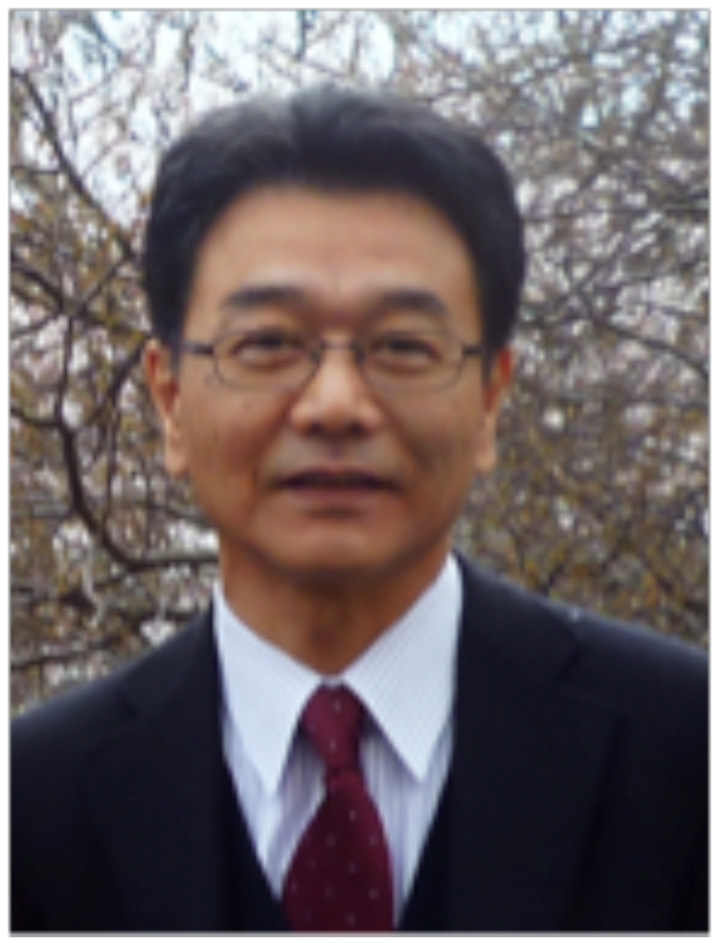 |
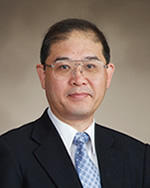
Takashi Tsuge, Councilor Takashi Tsuge received a Ph.D. degree from Nagoya University in 1987. He was a post-doctoral fellow from 1987 to 1989 at the Graduate School of Agriculture, Nagoya University. He was appointed as assistant professor at Nagoya University in 1989 and promoted to associate professor in 1990 and to professor in 2004. He has served as a councilor of the Phytopathological Society of Japan (PSJ) since 2004 and a member of Science Council of Japan since 2006. He majors in plant pathology. About 80 percent of infectious plant diseases are caused by fungi. His research focused on understanding the molecular mechanisms of host-specific infection, parasitic evolution, and sporulation in plant pathogenic fungi. He received the Young Scientist Award from the PSJ in 1987 and was designated a PSJ fellow in 2003. |
 |
Satoshi Harashima, Councilor Satoshi Harashima received his Ph D (Engineering) from Osaka University, at 1977, by his study on “Genetic system controlling mating-type switching in yeast”. After he spent one year in 1978 as a post-doctoral fellow supported by Japan Society for Promotion of Science (JSPS), he was appointed at 1979 to be Assistant Professor of Graduate School of Engineering, Osaka University, to start his academic career in the field of “Bioscience and Biotechnology of Yeast”. Since then, he has been serving for Osaka University for more than 35 years. During this period, he worked in Laboratory of Molecular Genetics, National Institutes of Health (NIH), at Bethesda, Maryland, USA for two years from 1984 to 1986 as a Visiting Associate. He was appointed to be Associate Professor in 1988 and then became a Professor at 1997. While he has been promoting his own research, he served for academia as President of Yeast Genetics Forum, Japan, from 2003 to 2005, Director of International Center for Biotechnology (ICBiotech), Osaka University, from 2007 to 2011, and President of The Society for Biotechnology, Japan (SBJ), from 2012 to 2013. |
 |
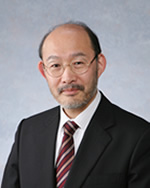
Yusuke Yanagi, Councilor Yusuke Yanagi graduated from the School of Medicine, Kyushu University in 1980, and received Ph.D. from the University of Tokyo in 1986. After holding research positions in Toronto University, the Scripps Research Institute, and the University of Tokyo, he became professor in Department of Virology, Faculty of Medicine, Kyushu University in 1995, and has stayed there since. He served as President of the Japanese Society for Virology during 2010-2013, and has been an Advisory Council member, Virology Division, IUMS since 2008. He studies virus entry into cells, the virus-host interaction, and viral pathogenesis, focusing mainly on negative strand RNA viruses, especially measles virus. |
 |
Atsushi Yokota, Councilor Atsushi Yokota received his Doctor’s degree from Hokkaido University in 1984. He worked for Central Research Laboratory of Ajinomoto Co., Inc. Kawasaki, Japan before he returned to Faculty of Agriculture, Hokkaido University as an Assistant Professor in 1989. During 1996 to 1997 he was a postdoctoral fellow at University of Groningen, the Netherlands. He became a Professor in 2000, and currently Professor at Laboratory of Microbial Physiology, Research Faculty of Agriculture, Hokkaido University. He worked as an Editor for FEMS Microbiology Letters from 2001 until 2010. He has been a board member of the Society for Biotechnology, Japan in charge of International Affairs since 2009, and the President of the Japan Society for Lactic Acid Bacteria since 2011. |
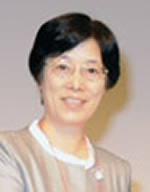 |
Akemi Nishikawa, Auditor Akemi Nishikawa received her Ph. D. from the University of Tokyo in 1980. She was a visiting associate at National Institutes of Health, National Institute of Arthritis, Diabetes, Digestive and kidney Diseases at Bethesda Maryland in 1984. After return to Tokyo, she initiated studies on immunobiology on yeasts at Meiji Pharmaceutical University, and became a Professor in 1998. She served as the Head of Department of Immunobiology from 1998-2012. She became a Professor Emerita of Meiji Pharmaceutical University in 2013, and continuously dedicates not only to promote her own research but also participated in academia as a board of members of the Japanese Society for Medical Mycology (JSMM) since 2003, a board of members of the Asia Pacific Society for Medical Mycology since 2009, and the Auditor of Federation of Microbiological Societies of Japan since 2010. The prize was given from the JSMM in 2011. |
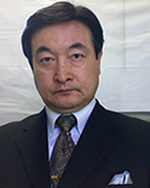 |
Masatoshi Noda, Auditor Masatoshi Noda received his Ph. D. from the University of Tokyo in 1982. He was a postdoctoral fellow at National Heart, Lung, and Blood Institute, National Institutes of Health at Bethesda, Maryland, USA from 1985-1988. After return to Japan, he initiated studies on bacterial toxins at Chiba University School of Medicine, and became a Professor in 1990. He served as the Presidential Aide of Chiba University from 1998-2000 and as the Vice Dean of Chiba University Graduate School of Medicine from 2007-2013. He continuously dedicates not only to promote his own research but also participated in academia as a cooperative member of Science Council of Japan since 2006, the President of Japanese Society for Bacteriology from 2009-2011, and the Director of Federation of Microbiological Societies of Japan since 2012. |
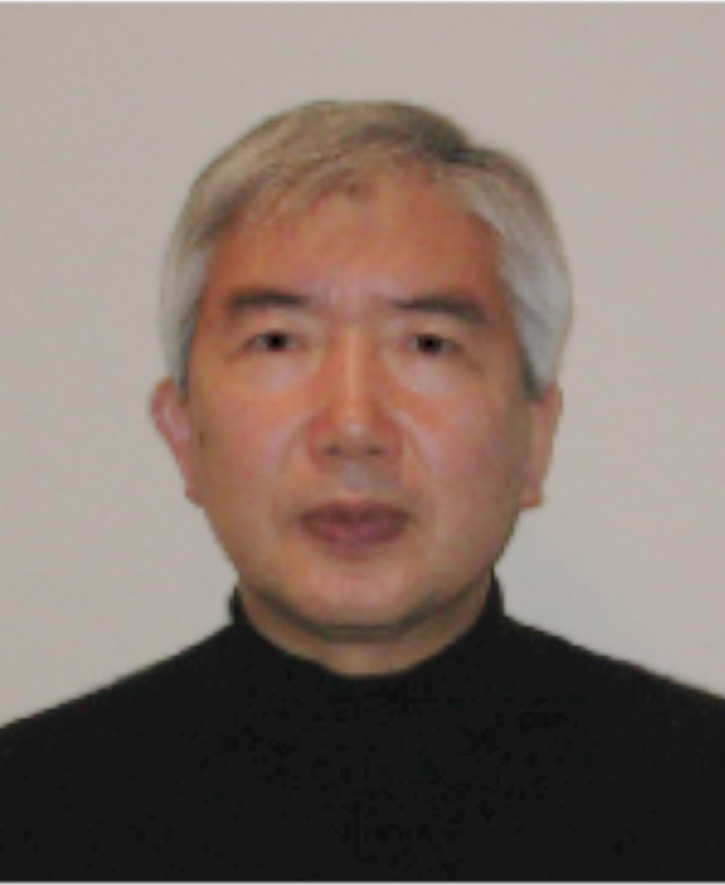 |
Toshiya Hirayama, Auditor Toshiya Hirayama is Professor of the Department of Bacteriology at Institute of Tropical Medicine, Nagasaki University. He graduated from Tohoku University in 1979 with Ph.D, dissertation in the Department of Enzymology. Hirayama then was Research Associate (1979-1984) at the Department of Bacterial Infection and Associate Professor at the Department of Bacterial Infection (1984-1989) and at the Cellular Biochemistry (1989-1992), Institute of Medical Science, the University of Tokyo. He served as the member of Science Council of Japan since 2010. His major research interest is to elucidate the etiologic agents isolated from pathogenic bacteria related to the worldwide emerging and reemerging diseases and to know the virulence mechanisms of bacterial pathogens. To elucidate the potential mechanism of how Heliocobacter pylori establishes infection, he investigates the host-parasite relationships of H. pylori, focusing on a protein toxin, VacA, which causes progressive vacuolation of epithelial cells and gastric injury as well as an oncogenic effecter protein, CagA, which is injected by its type IV secretion system into host cells. |
| |
 日本微生物学連盟事務局
〒112-0002
東京都文京区小石川4-13-18
株式会社 微生物科学機構内
FAX:03-6231-4035
E-mail:fmsj-office@umin.ac.jp